.svg)


Key takeaways
On this page


ederal incentives for solar power in the United States make clean energy more accessible. They help homeowners and businesses reduce upfront costs and benefit long-term.
Opening up Solar Savings: Federal Incentives Explained
SunValue operates nationwide across the United States, so every incentive discussed here lines up perfectly with the homes and businesses we serve—whether you’re in sunny Arizona, coastal Florida, or anywhere in between.
Here are the main federal solar incentives:
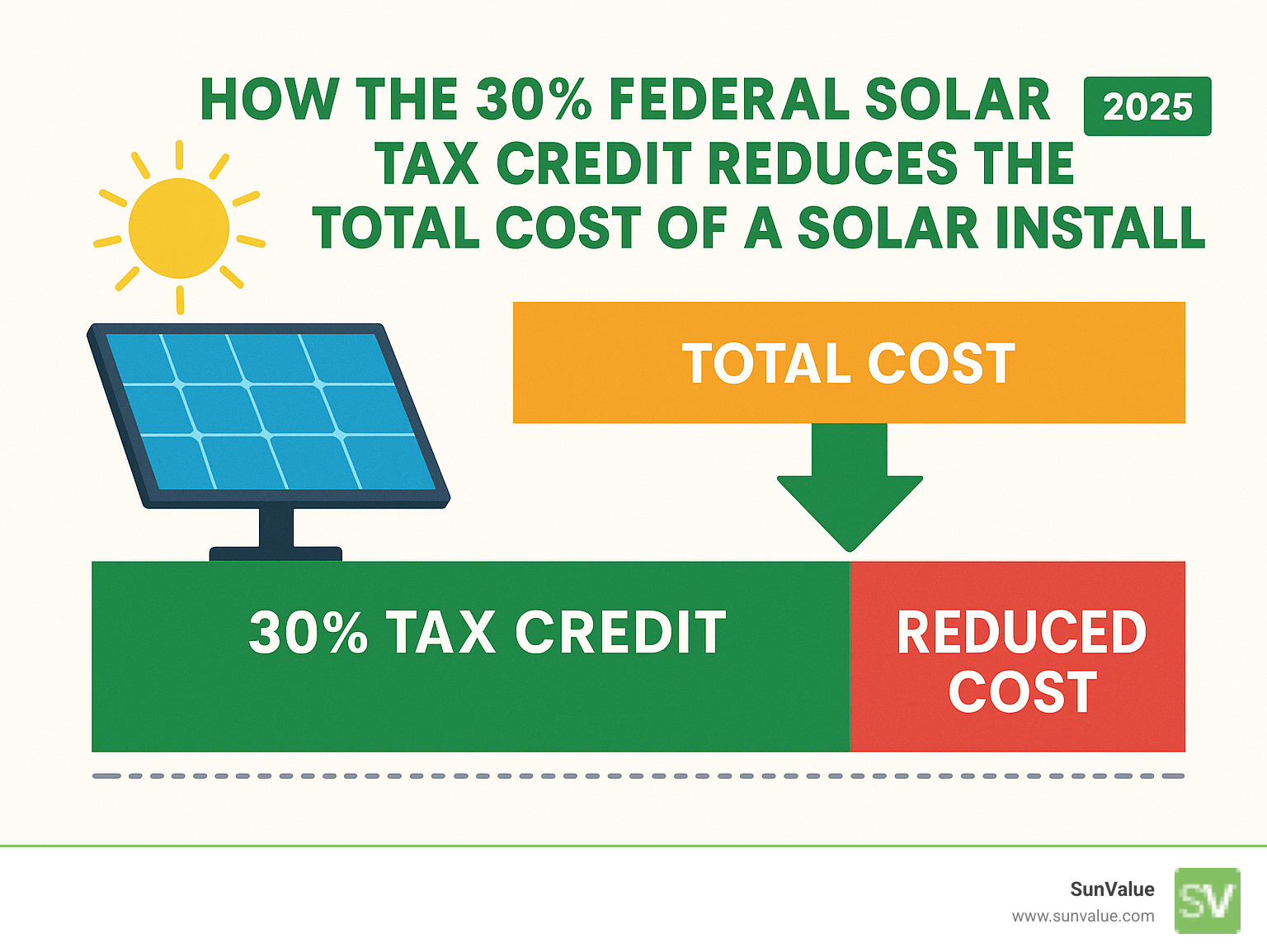
- For Homeowners: The Residential Clean Energy Credit (also known as the federal solar tax credit) offers a 30% tax credit on the cost of your solar installation.
- For Businesses: The Investment Tax Credit (ITC) provides a 30% tax credit, and the Modified Accelerated Cost-Recovery System (MACRS) allows for accelerated depreciation.
These powerful incentives, largely cemented by the Inflation Reduction Act, mean significant 30% savings for many. Understanding the costs, and how to make solar more affordable, is key. See our guides on How Much Does Installing Solar Panels Cost and Do Solar Panels Save Money for more.
This guide will break down these programs. It will help you understand how to qualify and claim your benefits.
I'm Nina Golban, and I've spent years helping people understand complex financial topics related to solar energy. My work has focused on explaining federal incentives for solar power and how they impact home values and investment returns.
Federal incentives for solar power vocabulary:
Understanding the Federal Solar Tax Credit for Homeowners
When we talk about federal incentives for solar power for homeowners, the main one is the Residential Clean Energy Credit. It's a dollar-for-dollar reduction of your federal income tax liability, not just a small deduction.
The Residential Clean Energy Credit, also known as the federal solar Investment Tax Credit (ITC), was extended and improved by the Inflation Reduction Act of 2022, ensuring substantial savings for homeowners who invest in solar.
This credit directly lowers your tax bill, making solar power more affordable. It's available for systems installed through 2034 on the following schedule:
- You get a generous 30% credit for systems installed through December 31, 2032.
- It then adjusts to 26% for systems installed in 2033.
- And 22% for systems installed in 2034.
- As of now, the credit is set to expire after December 31, 2034.
This long-term federal commitment brings stability to solar investments. The full 30% credit is in place for years, so you don't need to worry about it ending soon. Learn more about the 2024 Federal Solar Tax Credit and what happens if Solar Incentives Ending In 2025 What You Need To Know.
What is the Residential Clean Energy Credit?
The Residential Clean Energy Credit is the main federal incentive for solar power for U.S. homeowners. It allows you to claim 30% of your new solar panel system's total cost as a credit against your federal income taxes. This isn't a direct refund but a reduction in what you owe the IRS. It can increase an existing refund, but its main purpose is to lower your tax liability.
A key feature is that there is no maximum credit amount for solar projects. You can claim 30% of the total cost, no matter how large, leading to significant savings.
If your tax credit exceeds your tax liability, the unused portion can be carried forward to future tax years. You won't lose the benefit; it rolls over until fully used. For more details, check our guide on the Federal Tax Credit For Solar Power.
What Costs Are Eligible for This Federal Incentive for Solar Power?
To maximize your savings, it's important to know what's included when calculating your federal incentive for solar power. The credit covers a wide range of installation-related expenses.
Eligible costs include:
- Solar PV panels: The panels that convert sunlight into electricity.
- Solar water heaters: Systems that use the sun to heat water (must not be for pools or hot tubs, and at least half the energy must be from the sun).
- Battery storage systems (5 kWh+): As of 2023, battery storage devices with a capacity of 5 kWh or more are eligible for the 30% credit, a major benefit for homeowners seeking energy independence and backup power.
- Installation labor costs: Costs for site preparation, assembly, and original installation, including wiring and piping.
- Permitting fees: Costs for required project permits.
- Inspection costs: Fees for required safety and code inspections.
- Sales tax: Sales tax paid on eligible equipment and installation.
It's also important to know what's not covered:
- Roof replacement or repairs
- Tree trimming or removal
- Extended warranties
- Financing costs (like loan interest)
- Used panels
Ensure your system meets all fire and electrical codes. Solar water heaters must be certified by the Solar Rating and Certification Corporation (SRCC) or a similar entity.
Who Qualifies for This Federal Incentive for Solar Power?
To claim this federal incentive for solar power, you must meet certain eligibility requirements.
You generally qualify if:
- You are a homeowner: You must own the home where the system is installed. This can be your primary or secondary residence in the U.S.
- You own the system: You must purchase the system (with cash or a loan). If you lease or have a Power Purchase Agreement (PPA), the system owner claims the credit.
- You have sufficient tax liability: You need enough federal income tax liability to use the credit. If your liability is zero, you can't use the credit that year but can carry the unused portion forward.
- You are a renter (in rare cases): If you rent but personally purchase and install a solar system at your primary residence, you may qualify, though this is uncommon.
Parties that typically don't qualify include landlords who don't live in the home and those with leased systems. For more on tax considerations, see our insights on Solar Panel Tax Exemption.
How to Claim Your Federal Solar Incentive
Claiming your federal solar incentive is simpler than it seems. It primarily involves one tax form, but you must have your solar installation paperwork organized.
You claim the credit for the tax year when your system is installed and receives "Permission to Operate" (PTO) from your utility. PTO is the official activation of your system. For example, if installation is in December but PTO is in January, you claim the credit on that January tax year's return.
Keep all invoices, receipts, and contracts from your installation. This documentation is crucial for calculating your eligible expenses. For a broader understanding, explore our guide on Maximize Your Savings A Comprehensive Guide To Solar Incentives. For financing options, see our article on 5 Ways To Finance Your Solar System In 2025.

Step-by-Step Guide to Filing IRS Form 5695
To claim the credit, complete IRS Form 5695, Residential Energy Credits, and attach it to your Form 1040 federal tax return.
Here's a general guide:
- Calculate qualified expenses: Total all eligible costs from your invoices and receipts.
- Fill out Form 5695, Part I: Enter the total qualified cost of your solar electric property on Line 1. Add costs for other eligible items like solar water heating or battery storage on their respective lines.
- Calculate the credit: Add these costs on Line 7, then multiply by 0.30 (30%) to find your credit on Line 8.
- Transfer the credit: Transfer the final credit amount from Line 14 to Schedule 3 (Form 1040), Line 5, and attach Form 5695 to your return.
Important: You must subtract any utility subsidies or rebates that lowered your system's price from your qualified expenses before calculating the credit. However, net metering credits and most state energy efficiency incentives do not reduce your qualified expenses.
Tax forms can be complex, so we recommend consulting a qualified tax professional for personalized advice to ensure you maximize your credit.
Maximizing Your Savings: Combining Federal and Local Incentives
The federal tax credit is a great start, but you can increase your savings by "stacking" it with other programs. Combining federal incentives for solar power with state, local, and utility programs maximizes your return. This layered approach is why Solar Incentives are so powerful.
Here's how these incentives can work together:
- State tax credits: Many states offer their own tax credits that you can claim in addition to the federal one, further lowering your state tax bill.
- Utility rebates: Your utility company may offer rebates, which reduce your system's cost basis before you calculate the federal tax credit. For example, a $1,000 rebate on a $20,000 system means you calculate the 30% credit on $19,000.
- Net metering: This policy allows you to send excess electricity back to the grid for a credit on your utility bill, effectively lowering your energy costs.
- Solar Renewable Energy Certificates (SRECs): In some states, you can earn and sell SRECs. You earn one SREC for every 1,000 kWh your system generates, creating an additional income stream. SREC values fluctuate based on market supply and demand.
Combining these incentives significantly reduces your upfront cost and shortens your solar investment's payback period, making your switch to clean energy even more rewarding.
Federal Incentives for Solar Power for Businesses
Guess what? It's not just homeowners who get to enjoy the sunshine and smart savings from solar! Businesses, big and small, also have access to some seriously powerful federal incentives for solar power. These programs make going solar incredibly appealing for companies looking to cut operating costs, boost their green credentials, and invest in a brighter future.
Solar for businesses means more than just clean energy. It's about smart financial decisions. These incentives help reduce the upfront cost of large-scale solar installations. This makes it easier for companies to accept renewable energy projects. Want to know more about the different ways businesses can benefit? Our resource on Renewable Energy Tax Incentives is a great place to start.
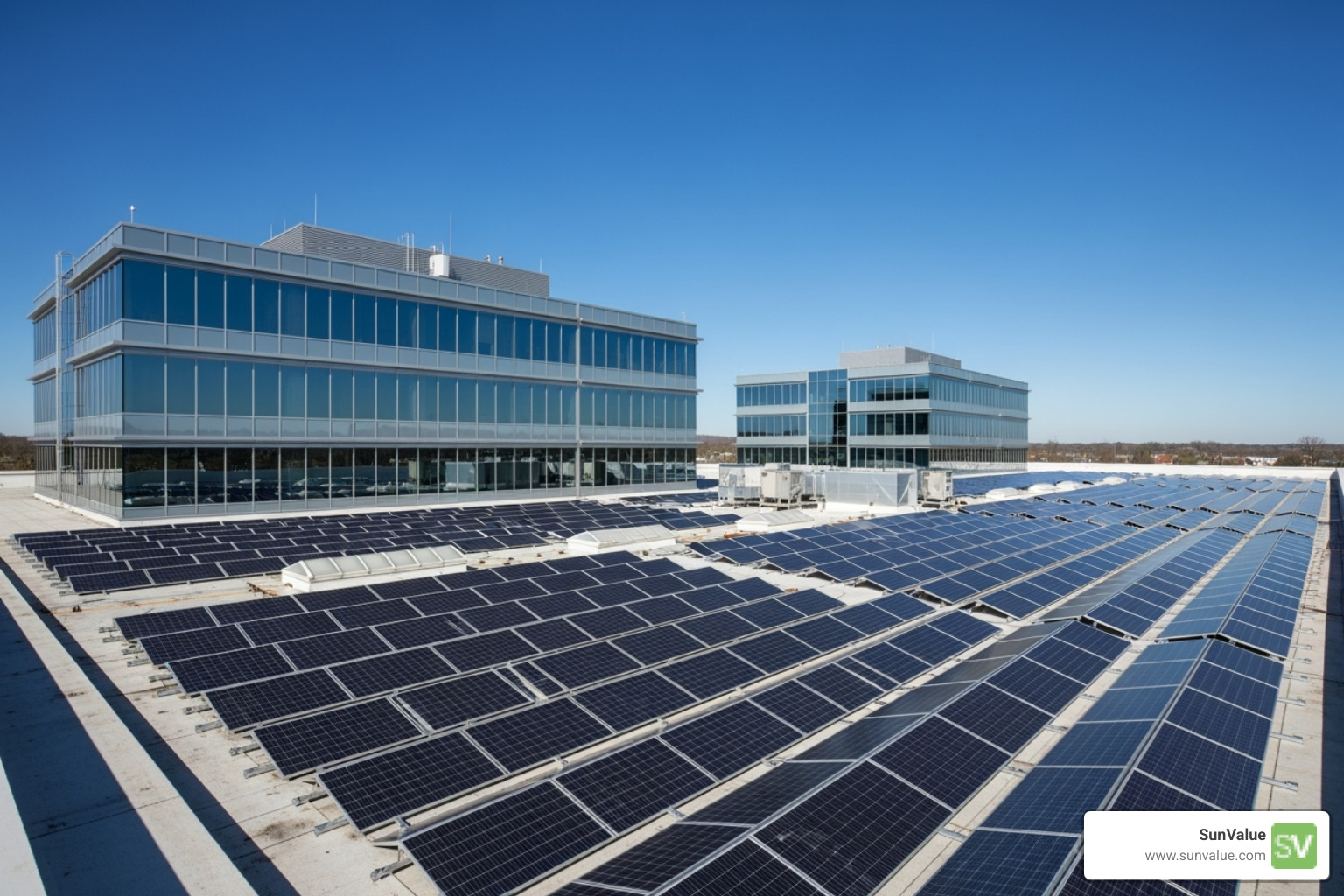
For businesses, the main federal incentives come in two big forms: tax credits and accelerated depreciation. These tools are designed to lower the financial problems. They encourage companies to invest in clean energy.
The Investment Tax Credit (ITC) for Businesses
The Investment Tax Credit, often called the ITC, is a cornerstone of federal incentives for solar power for businesses. It's similar to the residential credit, but with some extra perks for commercial projects. This credit gives you a 30% tax credit on the cost of your eligible solar energy system. That's a direct reduction in your tax bill!
But wait, there's more! The Inflation Reduction Act brought in exciting "bonus credits." These can push the ITC well beyond 30%, sometimes even over 50%! This means even bigger savings for businesses.
Here's how you can potentially get more:
- The Domestic Content Bonus can add an extra 10% credit. You get this if a certain amount of your project's components (like steel, iron, and manufactured parts) are made right here in the U.S. It's a win-win for clean energy and American jobs!
- The Energy Communities Bonus offers another 10% bonus. This is available if your solar project is located in an "energy community." These are areas that have historically relied on fossil fuel industries and are now transitioning to clean energy. It helps bring new opportunities to these regions.
- For smaller projects (under 5 MWac) that serve low-income communities or are built on Native American land, you could get an additional 10% or even 20% ITC. This is part of a special program designed to ensure everyone benefits from clean energy.
Businesses can strategically plan their solar projects to qualify for these bonus credits. It's about choosing the right components and locations to maximize your savings.
To get the full 30% ITC (and those bonus credits), larger projects (usually 1 MWac and up) need to meet certain labor requirements. This includes paying prevailing wages and having apprenticeship programs. Smaller projects, under 1 MWac, are typically exempt from these rules.
What costs are eligible? The ITC covers a wide range of expenses. This includes the solar PV panels themselves, inverters, racking, other system equipment (often called "balance-of-system"), sales and use taxes, and all the installation costs. Plus, new as of 2023, energy storage devices (like batteries) with a capacity of 5 kWh or more are also eligible.
Even tax-exempt organizations, like non-profits or local governments, can benefit. They can get these tax credits directly through a "direct pay" option. Or, they can transfer the credit to a tax-paying entity. This makes solar accessible to almost everyone, regardless of their tax status.
Accelerated Depreciation (MACRS) for Solar Investments
Beyond the ITC, there's another powerful federal incentive for solar power for businesses: the Modified Accelerated Cost-Recovery System, or MACRS. This isn't a tax credit, but it's a fantastic way to save money on your taxes. It allows businesses to recover the cost of certain property, including solar systems, much faster than usual.
Here's how MACRS helps your business:
- Five-Year Depreciation Schedule: Even though solar PV systems can last 25-30 years, MACRS lets businesses deduct their cost over a much shorter, five-year period. This means you can write off a bigger chunk of your system's cost from your taxable income in the first few years of operation. That's a significant financial boost early on!
- Bonus Depreciation: For a while, businesses could claim "bonus depreciation," allowing them to deduct an even larger percentage of the system's cost in the very first year. While the 100% bonus depreciation has phased down since 2023 (it was 80% in 2023 and 60% in 2024, and continues to decrease), accelerated depreciation is still a major benefit. It quickly reduces your taxable income.
By accelerating these deductions, businesses can significantly lower their tax bill in the early years. This leads to better cash flow and makes the overall financial picture of solar even brighter. When you combine the ITC with MACRS, you create a super-powered financial package. This can dramatically improve the return on investment for any commercial solar project. To understand the full financial picture, including payback periods and long-term gains, take a look at the Economics Of Solar Energy.
Frequently Asked Questions about Federal Solar Incentives
It's completely normal to have questions when you're looking into something as impactful as federal incentives for solar power. We hear a lot of similar queries from homeowners just like you, and we're happy to shed some light on the most common ones!
What happens if my tax credit is larger than my tax liability for the year?
This is a fantastic question, and actually, it's a "good problem" to have! The Residential Clean Energy Credit is what we call "nonrefundable." Now, don't let that word scare you. It simply means that while you won't get a direct cash refund for any amount of the credit that exceeds your tax bill, you certainly won't lose out on it either.
Here's how it works: If your calculated tax credit is, say, $6,000, but you only owe $4,000 in federal income taxes for that year, you'll pay $0 in taxes. The remaining $2,000 of your credit doesn't disappear! You get to carry that unused portion forward and apply it to your tax liability in future years, for as long as the credit remains in effect. It's like having a little solar savings account waiting for you with the IRS.
Are batteries and energy storage systems covered by the federal tax credit?
Yes, absolutely! This is exciting news for anyone looking for greater energy independence. As of 2023, battery storage systems are indeed eligible for the 30% credit. There's just one key requirement: the battery system needs to have a capacity of 5 kilowatt-hours (kWh) or more, and it must be installed in connection with a new or even an existing solar panel system at your home.
This eligibility addition makes it even more appealing to pair your solar panels with battery storage, giving you more control over your energy use and providing peace of mind during power outages.
Can I claim the credit if I finance my solar panel system with a loan?
Yes, you most certainly can! This is a super important point because it makes solar energy accessible to so many more homeowners. If you choose to take out a loan to finance the purchase of your solar system, you are still considered the owner of the system. Because you own it, you are fully eligible to claim the entire federal tax credit based on the total cost of the system.
The credit is calculated on the total cost of your solar installation, regardless of whether you paid for it with cash or financed it with a loan. The crucial distinction here is ownership. As long as you own the panels, rather than leasing them or entering into a Power Purchase Agreement (PPA) where another company owns the equipment, you're good to go!
Conclusion
So, as you can see, federal incentives for solar power in the United States is truly buzzing! It's clear that these programs are designed to make going solar easier and more affordable for everyone. Whether you're a homeowner dreaming of a sunny roof or a business looking to cut costs, there are amazing opportunities waiting.
Thanks to the generous 30% Residential Clean Energy Credit for homes, and the powerful Investment Tax Credit (ITC) along with accelerated depreciation for businesses, the financial problems to adopting clean energy are much lower than they used to be.
Honestly, there's never been a better time to accept solar. With that fantastic 30% federal tax credit locked in through 2032, you have a solid window to save big on your installation costs. Acting now means you'll grab those maximum savings before any potential changes or phase-downs in the future. But it's not just about the money, right? Going solar also means you're doing your part to reduce your carbon footprint, moving us all closer to energy independence, and even increasing your property value. That's a win-win-win!
We at SunValue are here to light the way. We understand that navigating these incentives can feel a bit complex, and that's exactly what we help with. Our special approach gives you instant, competitive quotes and a comprehensive savings analysis. This means you'll have all the clear information you need to make the best decision for your solar investment.
Ready to take that exciting first step toward a brighter, more sustainable future? It's time to see how quickly your solar panels can pay for themselves. Learn more about your Solar Panel Payback Period and find how these incredible federal incentives for solar power can dramatically shorten it. For all the details on how SunValue can help you open up these savings, hop over to our page on More info about solar incentives services.
Related
What is the federal solar tax credit for 2025?
In 2025, the Residential Clean Energy Credit lets homeowners claim 30% of their total solar installation costs as a credit on federal income taxes.

Can I claim the 30% solar tax credit if I use a loan?
Yes. As long as you own the system (via cash or loan), you can claim the full 30% tax credit. Leases and PPAs do not qualify.
Do solar batteries qualify for the federal solar incentive?
Yes, standalone and solar-connected battery storage systems with a capacity of 5 kWh or more are eligible for the 30% tax credit starting in 2023.
What form do I use to claim the solar tax credit?
Use IRS Form 5695 when filing your federal tax return. It calculates your Residential Energy Credit and must be attached to Form 1040.
Can businesses get federal incentives for solar panels?
Yes, businesses qualify for the 30% Investment Tax Credit (ITC) plus accelerated depreciation through MACRS, and may get bonus credits up to 50%.
Key takeaways
More from
Incentives and Savings
category


