.svg)


Key takeaways
On this page


he solar panel payback period calculator helps you understand how long it takes for your solar panels to pay for themselves through energy savings. It's a key tool for anyone considering going solar.
What is a Solar Panel Payback Period?
Here's how the simple payback period works:
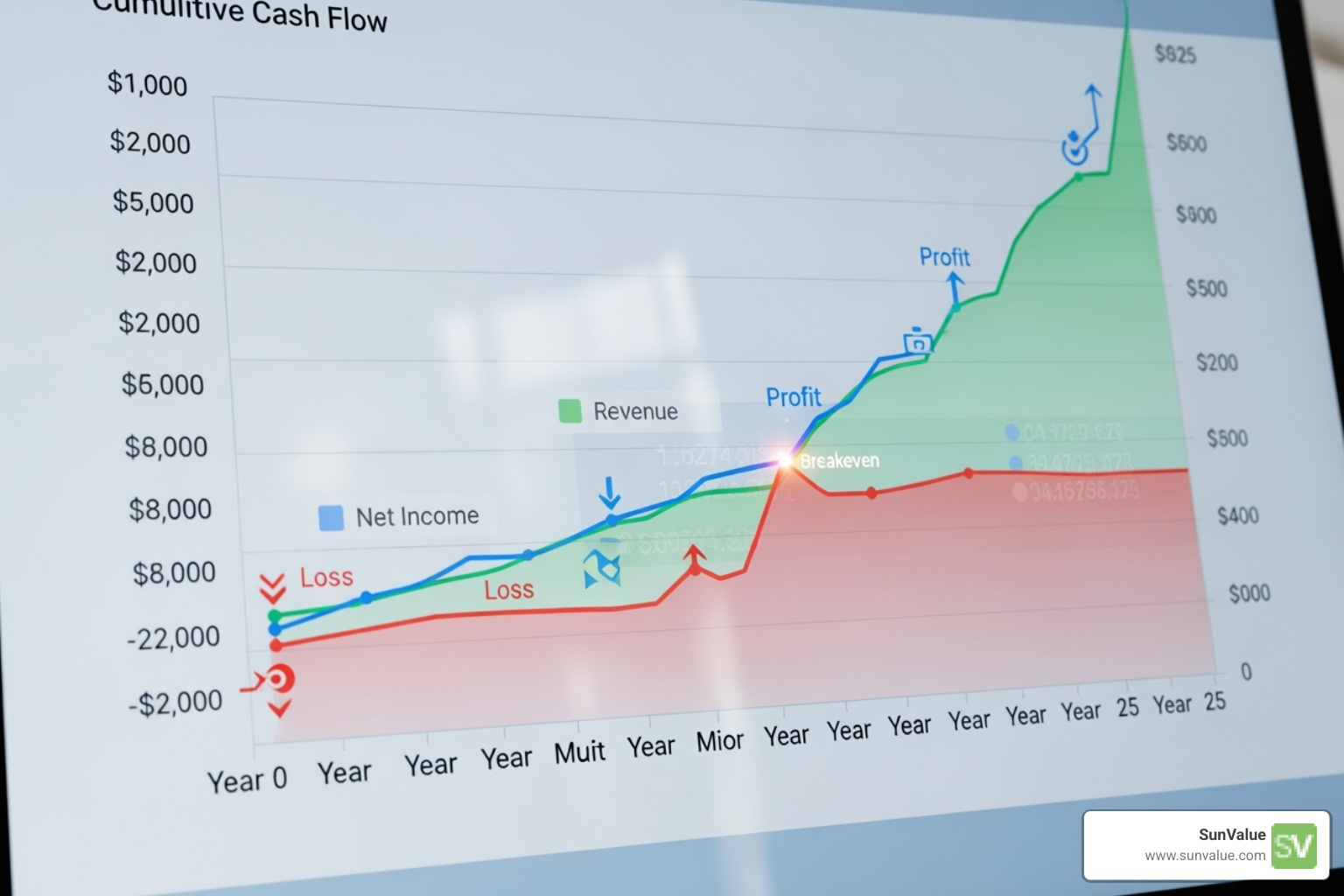
- What it is: The time it takes for the money you save on electricity to equal your upfront cost for the solar system.
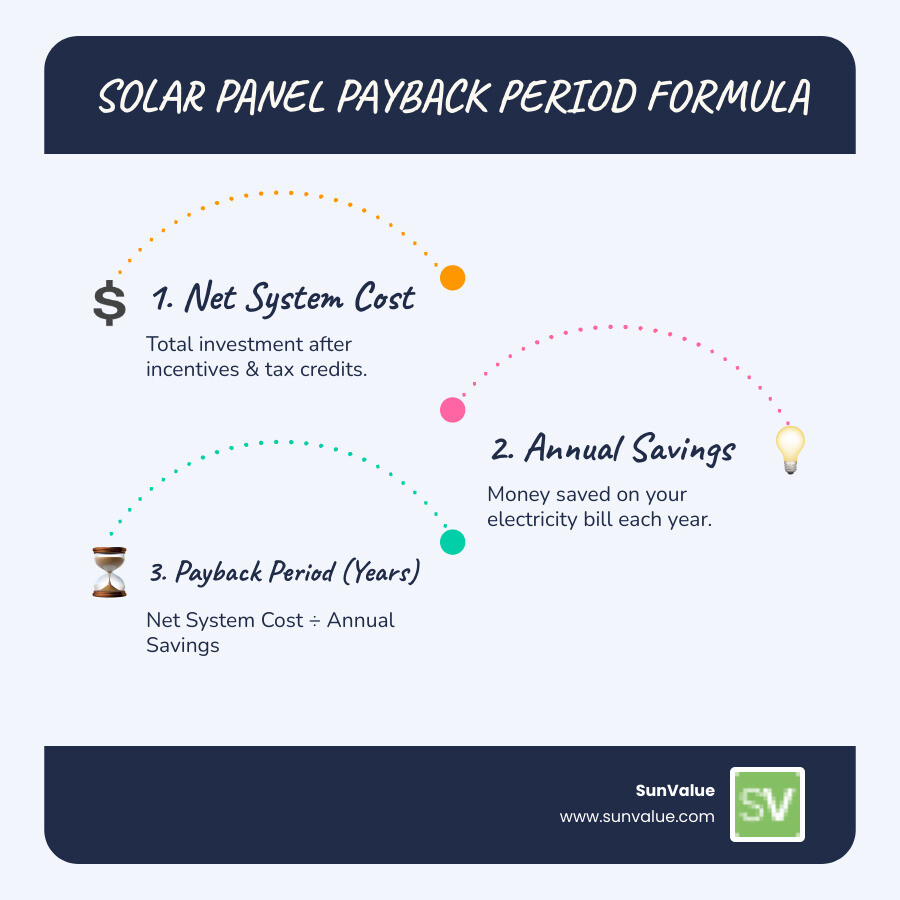
- How to calculate it: Divide your net system cost (after incentives) by your annual electricity bill savings.
- Typical timeframe: In the United States, the average payback time for a home solar installation is about 10 years, ranging from 5 to 15 years depending on location and other factors.
Solar panels are a big home improvement, but they are one of the few that pay for themselves. Once installed, your solar panels generate electricity, saving you from buying it from your utility company. Knowing your payback period helps you see the financial benefits of going solar and plan for long-term savings. Solar panels are designed to last at least 25 years, meaning you will enjoy many years of free electricity after your system has paid for itself.
We've spent years helping homeowners steer the complexities of solar investments. Our tools and content are designed to clarify metrics like the solar panel payback period calculator, helping you make confident decisions. Let's explore how these calculators work.
How to Calculate Your Solar Break-Even Point
The moment you start considering solar panels, one question inevitably pops up: "When will this actually start saving me money?" A solar panel payback period calculator can give you a clear picture of when your solar panels will start putting money back in your pocket.
How to Use a Solar Panel Payback Period Calculator
A solar panel payback period calculator provides a financial forecast for your solar investment, but it requires accurate information to work. The calculator will ask for several key inputs:
- Total system cost: This includes the panels, installation, and permits. This upfront investment pays for itself over time. If you're curious about what goes into this cost, our guide on How Much Does Installing Solar Panels Cost breaks it all down.
- Current electricity bill: This is a crucial piece of the puzzle. The average American household pays around $118 monthly, but yours might be higher. This number helps the calculator understand your current spending.
- Average energy usage: Input your average energy usage in kilowatt-hours (kWh), which you can find on your utility bills.
- Roof orientation and pitch: These factors matter more than you might think. A south-facing roof is ideal for maximizing production, but panels are effective on most roofs.
- Local electricity rate: This is a critical factor. High rates, like those in California, lead to a much shorter payback period and greater savings.
- Federal, state, and local incentives: The federal tax credit, combined with state and local incentives like rebates, can dramatically reduce your net system cost. Our Solar Energy Tax Credits page has all the details on maximizing these benefits.
These calculators are flexible. You can adjust the inputs to see how adding battery storage or planning for a future electric vehicle might affect your payback period.
Understanding Your Calculator's Results
Once you hit "calculate," you'll see several important numbers that provide a personalized financial report on your solar investment.
- Payback period: This is your headline number-the years it takes for your electricity savings to equal your initial investment. For example, a net cost of $11,200 with $1,500 in annual savings results in a 7.5-year payback.
- Lifetime savings: This projection shows the total money you'll save over your system's 25+ year lifespan. After the payback period, all energy savings are pure profit.
- Return on investment (ROI): This percentage shows your investment's profitability. The average US solar ROI is around 10%, often outperforming traditional investments.
- Recommended system size: The calculator will suggest a system size in kilowatts (kW), balancing your energy needs, roof space, and budget.
- Annual bill savings: This shows the immediate impact on your wallet once the system is running.
- Carbon emission reduction: Many calculators also show your positive environmental impact.
These results help answer the big questions: "Do solar panels save money?" and "Is it worth installing solar panels?" Check out our detailed guides on Do Solar Panels Save Money and Is It Worth Installing Solar Panels for deeper insights.
Limitations of a Solar Panel Payback Period Calculator
While a solar panel payback period calculator is incredibly helpful, it provides estimates, not guarantees. The calculations use current data and reasonable assumptions, but actual results may vary.
- Future electricity rate changes: These can significantly impact your savings. Historically, rates have risen about 2.5% annually. Higher future rates will shorten your payback period.
- Panel degradation: Solar panels naturally lose a small amount of efficiency over time (about 0.5% per year). Quality panels still operate at over 80% efficiency after 25 years, and good calculators account for this.
- Inverter replacement costs: Central inverters may need replacement in 10-15 years (costing around $1,500), while microinverters are typically warrantied for 25 years.
- Maintenance costs: Solar panels are low-maintenance, but occasional costs for cleaning or minor repairs can slightly extend your payback period.
- Importance of professional quotes: A calculator is an excellent starting point, but every home is unique. A professional installer can provide an accurate assessment based on your specific roof conditions, shading, and local regulations. Our Solar Energy Cost Analysis explains how to get detailed cost breakdowns.
Use the calculator as your first step, but always follow up with professional consultation to fine-tune your investment strategy.
Understanding the Factors That Influence Your Solar Panel Payback Period Calculator Results
Now that we know how to use a solar panel payback period calculator, let's explore the factors that influence the results. Understanding these gives you the power to potentially shorten your payback and maximize your savings.
What is a Good Solar Payback Period?
What's considered a "good" payback period for solar panels? Let's look at the numbers:
- Average US Payback Period: In the United States, the average payback time for a home solar installation is about 10 years, which is a solid benchmark.
- National Range: Payback time can range between 5 and 15 years in the US. States with high electricity rates and strong incentives, like Hawaii and Massachusetts, can see payback in as little as 5 years.
- Good Payback Benchmark: Since solar panels are designed to last at least 25 years, any payback period under 12.5 years is considered a great investment.
- State-by-State Variation: Regional differences in electricity rates, sunlight levels, and incentives are crucial. For example, payback periods in Australia can vary from 2 to 6 years, highlighting how much location impacts financial returns.
If your solar panel payback period calculator shows a result under 12.5 years, you're likely on track for a very strong financial return. For more insights, check out our article on the Economics Of Solar Energy.

Key Factors That Shorten or Lengthen Your Payback Time
The payback period is a dynamic calculation influenced by several key factors:
- Upfront System Cost: A lower initial investment means a faster payback. Getting competitive quotes is crucial to find the best price without sacrificing quality.
- Government Incentives: The federal solar tax credit (ITC), state credits, local rebates, and programs like SRECs significantly reduce your net cost and shorten the payback period. Our guide on Solar Incentives And Rebates has all the details.
- Local Utility Rates: High electricity rates accelerate your payback. The more you pay per kWh, the more you save with solar.
- Net Metering Policies: Favorable net metering policies, where your utility credits you for excess energy sent to the grid, are crucial for offsetting your bill and shortening payback.
- Sunlight Exposure (Solar Insolation): More sun means more power. Your geographic location, local weather, and any roof shading all impact energy generation.
- System Efficiency: Higher efficiency panels and inverters generate more power from the same amount of sunlight, boosting your savings. Learn more in our article on Solar Panel Efficiency.
- Household Energy Consumption: High energy users stand to save more money, leading to a shorter payback period. It's wise to also consider potential future increases in consumption.
Payback Period vs. ROI and IRR: A Deeper Financial Dive
While the solar panel payback period calculator is a fantastic starting point, other metrics like Return on Investment (ROI) and Internal Rate of Return (IRR) offer a deeper look at the long-term financial picture.
Simple Payback vs. Return on Investment (ROI)
The payback period tells you when you'll break even, while ROI tells you how much profit you'll make over the system's lifetime.
- Payback Period: This is the time it takes for your electricity bill savings to cover your initial investment. It's your break-even point. You can learn more in our article on the Solar Panel Payback Period.
- Return on Investment (ROI): This percentage shows the total financial gain from your investment over the system's lifespan. It measures how much profit you'll make.
Lifetime profitability is key. With a 25-year panel lifespan and an average US payback period of around 10 years, you get to enjoy 15+ years of essentially free electricity. This contributes to an average ROI on solar panels in the United States of about 10%, making it a strong investment.
Why Internal Rate of Return (IRR) is a Superior Metric
The Internal Rate of Return (IRR) is a more sophisticated metric that provides an accurate understanding of your investment's true value.
- Internal Rate of Return (IRR): IRR is the effective annual rate of return your investment generates. Its power lies in considering the "time value of money," recognizing that a dollar saved today is worth more than a dollar saved in the future. This provides a precise picture of profitability.
- Comparing Investments: IRR's greatest strength is allowing for "apples-to-apples" comparisons between different investments, such as solar versus the stock market.
- Solar vs. Stock Market: While a broad stock index fund like the S&P 500 has a historical average return of about 8% per year, many solar installations achieve an IRR of 10% or higher. In states with strong incentives and high electricity rates, IRR can even reach 16-20%, making solar a highly competitive investment.
While a calculator provides a great start, IRR offers a more financially sound way to assess long-term value when comparing investment opportunities.
MetricWhat it Tells YouFocusBest ForPayback PeriodHow many years until your initial investment is fully recouped through savings.Time to break-evenGetting a quick, intuitive understanding of when you'll get your money back.ROIThe overall percentage of profit you'll earn on your investment.Total profitability over a specific periodUnderstanding the total financial gain your solar system generates over its entire lifespan.IRRThe effective annual rate of return, accounting for the time value of money.True profitability, comparable across investmentsComparing your solar investment against other opportunities (like stocks or bonds) for a comprehensive financial analysis.
How to Maximize Your Solar Savings and Shorten Your Payback Period
You've explored the solar panel payback period calculator and understand the numbers. Now, let's talk about how to boost your savings and shorten that payback period through smart choices and energy-savvy habits.
Strategic System Sizing and Future-Proofing
Thinking ahead when planning your solar system is one of the smartest moves you can make.
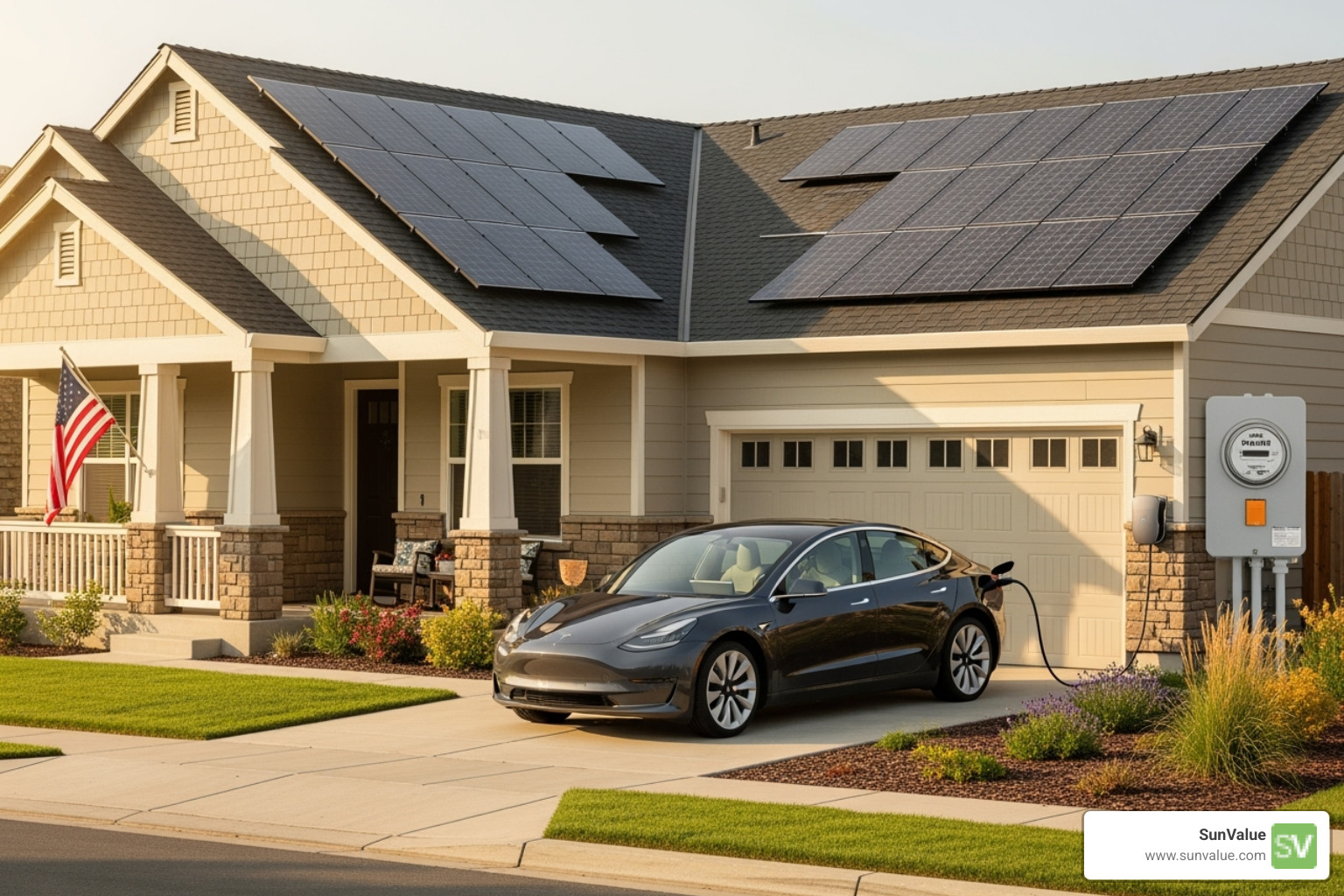
Consider your future energy needs. Are you planning to get an electric vehicle (EV) or a battery storage system? Sizing your solar system to cover these future loads from the start will maximize your savings. While you can add panels later, it's often more complicated and costly due to new permits and wiring. It's usually more budget-friendly to install a slightly larger system upfront.
In some areas, it's even smart to oversize your solar array compared to your inverter. This helps account for minor efficiency losses and boosts your output, which can be beneficial if rebates are tied to array size. Thinking about your long-term energy goals helps "future-proof" your system, ensuring it delivers savings for decades. To figure out the right size for your home, see our guide on How Many Solar Panels Do You Need. For more on battery storage, this Battery Storage article is a great resource.
Optimizing Your Energy Usage for Faster ROI
Once your panels are installed, how you use electricity can significantly impact your payback period. This is known as "self-consumption." The goal is to use as much of your solar power as it's generated-during daylight hours. This is more valuable than exporting it to the grid for a small credit.
Try to shift your use of high-energy appliances like your washing machine, dishwasher, or air conditioning to sunny periods. Maximizing self-consumption speeds up your payback, even with good net metering. Use smart appliances and timers to schedule tasks for peak solar production. By shifting your energy usage, you buy less electricity from the utility, which speeds up your savings and shortens your payback period. Learn more in our article on How Solar Panels Can Save Money. You can also explore other energy-saving tech like an efficient electric heat pump.
Taking Full Advantage of All Available Incentives
Incentives are a game-changer for your solar payback period. Missing out can add years to your break-even point. Key incentives to research include:
- The Federal Solar Tax Credit (ITC): This allows you to claim a percentage of your system's cost as a credit on your federal income taxes, significantly lowering your net cost.
- State tax credits: Many states offer their own credits that can be combined with the federal ITC.
- Local rebates: Your city or county may offer cash-back rebates or direct discounts.
- Solar Renewable Energy Certificates (SRECs): In some states, you can earn and sell these certificates for the clean energy you produce, creating an ongoing income stream.
- Utility incentives: Some utility companies offer their own programs to encourage solar adoption.
These incentives make solar more affordable by reducing the initial cost. Research all incentives available in your area using our guides, Maximize Your Savings A Comprehensive Guide To Solar Incentives and The Ultimate Guide To Solar Incentives In 2025.
Conclusion: Your Path to Energy Independence Starts Here
We hope this guide has demystified the solar panel payback period calculator and shown you the real potential of solar for your home. Solar is one of the smartest long-term investments you can make. While there's an upfront cost, unlike most home improvements, solar panels pay you back month after month.
Your solar panels will work for you for at least 25 years, generating free electricity long after they've paid for themselves. This means 15+ years of energy savings flowing directly into your pocket.
The benefits extend far beyond financial returns. When you go solar, you gain energy independence from unpredictable utility rate hikes. You also increase your home's value, making solar one of the few home improvements that adds more value than it costs.
And don't forget the environmental benefits. You'll be powering your life with clean energy from the sun, reducing your carbon footprint and helping create a cleaner future.
At SunValue, we know going solar is a big step. That's why our tools, like the solar panel payback period calculator, provide the clear, honest information you need to make the best decision for your family's energy future.
Ready to see what solar could mean for you? Don't guess when you can know for sure. Get a personalized savings estimate with our Solar Power Calculator and find your path to energy independence today. We're here to help you every step of the way!
Related
What is a solar panel payback period?
It's the number of years it takes for your solar savings to equal the cost of your system. After this point, electricity from your panels is essentially free.

How do I calculate my solar payback period?
Divide your net system cost (after tax credits and rebates) by your annual electricity bill savings. The result is your estimated payback time.
What’s a good solar payback period in 2025?
Any payback period under 12.5 years is considered excellent. Many homeowners in states like California and Massachusetts see payback in just 5–7 years.
What factors affect my solar panel payback time?
Key factors include your total system cost, local electricity rates, solar incentives, sun exposure, panel efficiency, and energy consumption.
Does a shorter payback period mean better solar ROI?
Yes. A shorter payback often leads to higher long-term ROI. It means you recover your investment sooner and enjoy more years of free energy savings.
Key takeaways
More from
Incentives and Savings
category


